What gives one Holmby Hills property an edge over another when both sit behind gates and mature landscaping? In this pocket of Los Angeles, value often lives deeper than finishes or square footage. If you are buying, selling, or simply trying to understand the market, it helps to know why provenance and privacy carry real weight here. Let's dive in.
Holmby Hills Starts With Land Story
Holmby Hills was laid out in 1925 on 400 acres of the former Wolfskill Ranch by Arthur Letts and the Janss brothers, according to SurveyLA. From the beginning, it was planned as an estate district, with major investment in paving, buried utilities, landscaping, community lighting, parks, and bridle trails. That origin still shapes how buyers and sellers think about value today.
This matters because Holmby Hills was never just another residential subdivision. Its lot pattern, estate scale, and quiet setting were part of the original product. When you evaluate a home here, you are often evaluating the land story as much as the house itself.
Provenance Adds More Than Glamour
In Holmby Hills, ownership history can become part of the value proposition. A property with a meaningful backstory often stands out because the story helps define scarcity, identity, and market appeal. In other words, provenance is not just decorative language in a listing. It can influence pricing and negotiation.
A strong example is Owlwood. A current HistoricPlacesLA resource report ties the estate to the Janss-Letts family compound and Florence Letts Quinn, with later residents including Joseph Schenck, William Keck, Marilyn Monroe, Tony Curtis, Janet Leigh, and Sonny & Cher.
That kind of history can create a premium, but it does not erase market discipline. Public sales show that Owlwood sold for $88 million in 2020, The Manor sold for $119.75 million in 2019, and the Playboy Mansion sold for $100 million in 2016. Each was iconic, yet each also illustrates that buyers still weigh condition, utility, land value, and comparable sales.
Why Provenance Works In Negotiation
For sellers, a compelling ownership story can expand the buyer pool beyond people who are only comparing room counts and finishes. It can position the home as a legacy asset. That is especially relevant in Holmby Hills, where buyers often care about culture, design, and long-term significance.
For buyers, provenance should be treated as a real feature, but not an automatic blank check. The right question is whether the story is supported by the property itself. If the estate also delivers privacy, lot scale, access, and architectural quality, the premium may be justified. If not, the story alone may not carry the number.
Architectural Pedigree Has Pricing Power
Holmby Hills also benefits from architectural name value. SurveyLA identifies the area as part of a broader estate setting that includes work associated with notable architects and landscape architects such as George Washington Smith, A. E. Hanson, Gordon Kaufman, Richard Neutra, Lloyd Wright, Raphael Soriano, John Lautner, A. Quincy Jones, Buff and Hensman, and Craig Ellwood.
That design pedigree matters because buyers in this segment often understand authorship. A recognizable architectural lineage can make a property more memorable and more defensible at a premium. It can also shift how a home is marketed, shown, and negotiated.
The Singleton Estate is one concrete example. The Los Angeles Conservancy describes it as a seven-acre estate and the largest and last major work of Wallace Neff, with landscapes by Thomas Church and Philip Shipley. When a property carries that level of authorship, the architecture becomes part of the investment case.
Historic Status Changes The Process
Architectural significance can boost appeal, but it can also add complexity. A City Planning info brief on Historic-Cultural Monuments explains that designation can delay demolition, requires review by the Office of Historic Resources before alteration permits are issued, and can trigger CEQA review before demolition occurs.
That does not mean a designated property cannot be changed or even demolished. The same City Planning brief notes that designation does not guarantee a building cannot be demolished. Still, if you are buying or selling a landmark-caliber home, you should understand that prestige and process often come together.
For sellers, this can affect timing and diligence, much like the careful approach required when selling a historic estate with discretion. For buyers, it can shape renovation plans, carrying costs, and long-term stewardship decisions. In Holmby Hills, that layer of complexity is often part of what separates a true trophy asset from a simpler luxury home.
Privacy Is Built Into The Neighborhood
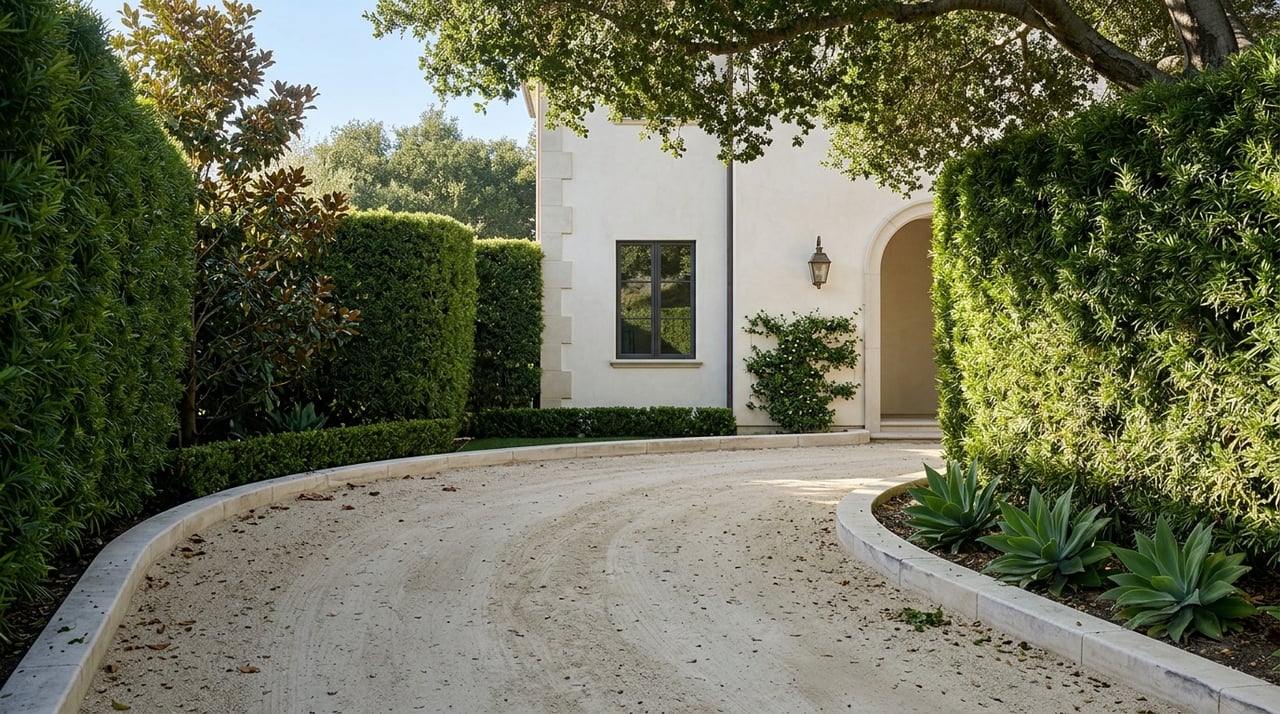
Privacy in Holmby Hills is not just a feature added by hedges or gates. It is tied to the physical form of the neighborhood itself. SurveyLA describes the surrounding area as predominantly single-family, with many estate-sized properties, a non-gridded street plan that follows the terrain, and large swaths of undeveloped land.
Those planning choices create a different experience from a more conventional luxury neighborhood. Lot depth, setbacks, screening, and approach all matter. So does how much of the property is visible from the street.
Owlwood offers a useful example again. The HistoricPlacesLA report notes that the property is not visible from the public right-of-way. In a market like Holmby Hills, that kind of hiddenness can strengthen both buyer appeal and perceived rarity.
Lot Scale Drives A Privacy Premium
Buyers here are often paying for more than the residence itself. They are paying for seclusion, quiet, and breathing room that are hard to replicate. That premium is tied to parcel scale, screening, access, and how the estate sits within the streetscape.
Holmby Hills also benefits from a long-running effort to preserve its residential character. The Holmby Hills Homeowners Association states that its purpose is to protect the neighborhood's residential character and oppose construction that is out of scale or context. That kind of local posture helps explain why consistency of setting matters so much to value.
There is also a broader Los Angeles context. The Los Angeles Conservancy notes that citywide mansionization rules were written in response to concerns about building bulk, driveway and garage scale, privacy, grading, and tree loss. In practice, that reinforces how deeply privacy and site planning are tied to buyer expectations in estate neighborhoods.
Character Comes From Parcels And Design
One important nuance is that Holmby Hills does not rely on a single blanket historic overlay to preserve its identity. SurveyLA says the neighborhood spans two community plan areas and that there were no designated or proposed HPOZs or historic districts in the community plan area at the time of survey.
That means value is often protected less by one umbrella rule and more by the fundamentals of the neighborhood. Parcel size, design quality, individual landmark status, and overall estate character do much of the work. For you as a buyer or seller, that makes property-level analysis essential.
The Market Is Thin By Nature
Holmby Hills is a small, thin market, and that affects how numbers should be read. Redfin reports a March 2026 median sale price of $6.9 million, based on just 3 homes sold, with a median 186 days on market. Realtor.com, using listing data as of May 2026, shows 14 active listings, a median listing price of $3.695 million, and a median 71 days on market.
At first glance, those figures may look inconsistent. In reality, they reflect how volatile public dashboards can appear when the sample is tiny and the homes are highly varied. In Holmby Hills, one or two unusual transactions can skew the headline quickly.
That is why pricing here cannot be reduced to a simple average. A home with notable provenance, major land, architectural authorship, and strong privacy may operate in a very different lane from another home in the same ZIP code.
Pricing The Story Correctly
For sellers, the lesson is clear: price the story, but only when the story is real and supportable. Provenance, design pedigree, lot depth, and privacy can justify a premium. Public examples in Holmby Hills show that these attributes matter, but they still need to be matched by condition, utility, and market evidence.
Overreach can be expensive. The sales history of landmark estates shows that even iconic properties may trade below aggressive initial asking prices. In this segment, disciplined pricing often outperforms aspirational pricing that assumes every famous address will command any number.
How Buyers Can Underwrite The Premium
For buyers, the job is to separate emotional value from market value without ignoring either one. If a premium is being asked because a property is historically important, architecturally significant, or unusually private, confirm that those traits are measurable and meaningful.
A smart review usually includes questions like these:
- Is the ownership history well documented?
- Does the architecture have recognized authorship or preservation significance?
- How visible is the estate from the public right-of-way?
- Does the parcel offer unusual depth, screening, or approach?
- Are there any Historic-Cultural Monument considerations that could affect future plans?
In a market as specialized as Holmby Hills, those details can have a direct effect on what a property is worth to you today and how it may perform later.
Why Strategy Matters In Holmby Hills
Holmby Hills rewards nuance. The best opportunities are rarely defined by one feature alone. Instead, value tends to come from a combination of land story, architectural quality, privacy, and scarcity.
That is why representation matters so much in this segment. When a property carries emotional history, public recognition, or unusual site characteristics, the conversation must go beyond standard comps. You need positioning, discretion, and negotiation strategies that fit the asset.
If you are considering a sale or purchase in Holmby Hills, working with someone who understands trophy estates, landmark-caliber homes, and the psychology behind premium pricing can make a meaningful difference. For tailored guidance on buying or selling in this rarefied market, connect with Josh Flagg.
FAQs
How does provenance affect home value in Holmby Hills?
- Provenance can increase appeal and support a premium when a property has documented ownership history, cultural relevance, or a recognized place in Holmby Hills history, but buyers still weigh land, condition, utility, and comparable sales.
Why is privacy so important in Holmby Hills real estate?
- Privacy matters because Holmby Hills was planned as an estate district with large lots, a quiet residential setting, and a street layout that supports seclusion, making hiddenness and limited street visibility valuable traits.
Do famous Holmby Hills homes always sell for their asking price?
- No. Public examples like Owlwood, The Manor, and the Playboy Mansion show that iconic homes can command extraordinary prices while still selling below ambitious initial asking numbers.
What should buyers review in a historic Holmby Hills property?
- Buyers should review ownership history, architectural authorship, lot configuration, visibility from the street, and whether Historic-Cultural Monument status or review requirements could affect future alterations.
Is Holmby Hills protected by one historic district overlay?
- SurveyLA reported that there were no designated or proposed HPOZs or historic districts in the community plan area at the time of survey, so neighborhood character is shaped more by parcel scale, design quality, and individual landmark status.
Why can public market data look inconsistent in Holmby Hills?
- Holmby Hills is a thin market with very few sales and highly varied properties, so different data sources can show very different median prices and days on market depending on whether they measure closed sales or active listings.