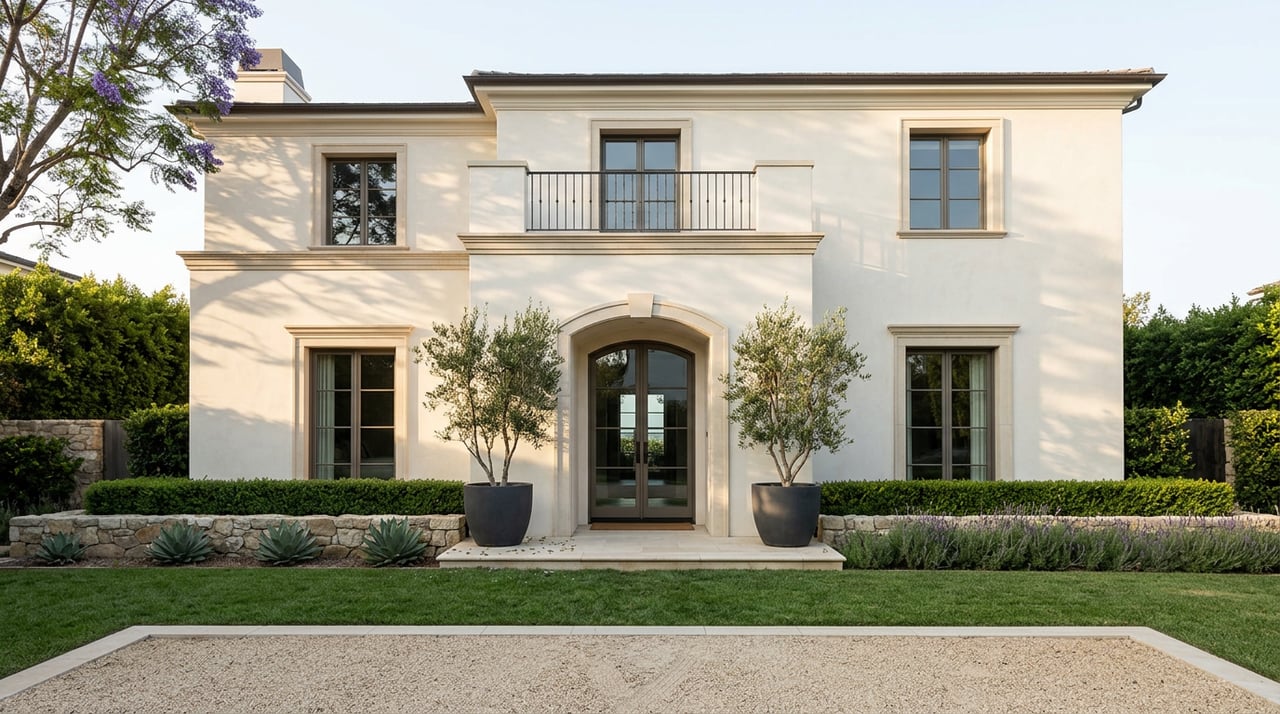
If you price a Bel Air estate wrong, the market usually tells you slowly and expensively. That is the challenge with luxury pricing in a neighborhood where every property can look exceptional on paper, but only a narrow group of buyers may truly compete for it. If you are preparing to sell, this guide will help you understand what really drives value in Bel Air, how to separate ambition from strategy, and why disciplined pricing can protect both momentum and outcome. Let's dive in.
Why Bel Air Pricing Is Different
Bel Air is not a broad, uniform market. It is a thin, high-end micro-market within Los Angeles, and that matters because a small number of listings and sales can skew averages quickly.
Recent data shows a mixed but clearly luxury-oriented market. Redfin reported a median sale price of $3.35 million in the three months ending May 2026, with homes taking 94 days on market and selling about 6% below list on average. Zillow's June 30, 2026 data showed an average home value of $4.19 million, 60 homes for sale, 10 new listings, and a median list price of $4.62 million.
Those figures are not a contradiction. They measure different things over different time periods, but together they tell you something important: Bel Air pricing requires precision, not shortcuts.
At the broader metro level, Los Angeles-Long Beach-Anaheim ranked as the second most expensive luxury market in April 2026, with the top 10% of listings starting around $4.2 million. In other words, Bel Air sellers are operating near the top of an already expensive luxury landscape.
Start With Closed Sales, Not Buzz
In Bel Air, headlines can be distracting. A splashy asking price may generate attention, but it does not prove market value.
The most useful pricing guidance usually comes from closed comparable sales, especially properties that match your home as closely as possible. In a neighborhood like Bel Air, that means comparing micro-location, lot profile, view corridor, architectural era, and condition, not just bedroom count or total square footage.
That narrow comp set matters because the market is small. A few unusual transactions can pull neighborhood averages up or down, which makes broad median data less helpful for a one-of-one estate.
A well-known example illustrates the risk of leaning too heavily on an aspirational number. The Paul Nassif spec home was first listed at $32 million, later reduced multiple times, and ultimately sold at auction for $20.6 million after nearly two years on the market.
The lesson is simple. List price is a hypothesis, not proof. You can ask for a premium when a property is truly rare, but the market still has to agree.
The Value Drivers That Matter Most
Bel Air buyers do not price homes by square footage alone. In many cases, the real value story is built from the land, the architecture, and the setting.
Land Carries Real Weight
In Bel Air, land can be as important as the residence itself. Longtime Bel Air broker Bruce Nelson told the Los Angeles Times that acreage is what pushes values up, a point that still reflects how this market thinks about estate pricing.
That principle fits the neighborhood's physical history. City planning materials describe early Bel Air estate development as one-acre-or-more lots shaped around the natural topography to preserve views. That means lot size, slope, shape, privacy, and buildability are central pricing inputs, not side details.
If your property has a broad flat pad, useful frontage, strong access, or a site that supports future flexibility, those traits may influence value significantly. In Bel Air, the land often helps determine the buyer pool as much as the house does.
Architecture Can Shift Perceived Value
Not every older home deserves a premium just because it is older. But in Bel Air, documented design pedigree and estate history can meaningfully affect how buyers judge value.
City planning materials identify notable historic resources and planning districts in the area, including homes associated with architects and design figures such as Paul Williams and Wallace Neff. For a seller, that means provenance can be a real pricing factor when it is authentic and relevant.
Buyers at this level often respond to more than finishes. They notice authorship, scale, proportion, restoration quality, and whether a home feels like a commodity product or a lasting asset.
Views, Privacy, and Street Position Matter
Bel Air has long been associated with lush grounds and sweeping city or ocean views. In practical pricing terms, that means outlook, privacy, and street placement should be evaluated alongside the house itself.
A home with a stronger view corridor, a more private approach, or a better position on the street may command more attention than a larger house with weaker siting. In luxury real estate, emotional pull often starts before the front door.
Aspirational Price vs Achievable Price
Every seller wants to protect upside. The key is knowing where strategic ambition ends and where costly overreach begins.
Bel Air's current market data suggests real price discipline. Redfin reports that average homes sell about 6% below list and go pending in around 71 days, while hot homes can still sell about 2% above list and move in about 38 days.
That split tells you something useful. Buyers will still move quickly for a listing that feels right, but they are not rewarding every seller's highest number.
An aspirational price is the number you hope a rare buyer might accept. An achievable price is the number that reflects recent evidence, current competition, and the likely depth of your buyer pool.
In Bel Air, the gap between those two numbers can be expensive. Overpricing can extend days on market, weaken urgency, and lead to reductions that make a property feel stale.
How Strategic Pricing Protects Your Position
Pricing is not just about where you start. It shapes how buyers interpret the entire opportunity.
When a home comes out at a disciplined number, buyers are more likely to view it as serious, current, and worth acting on. That can improve showing activity, create competitive energy, and give you stronger negotiating leverage.
When a home launches too high, buyers may decide to wait. In a selective market with a finite audience, that delay can be hard to reverse.
For unique Bel Air estates, the goal is not to underprice. The goal is to enter the market at a number that invites belief.
Timing Your Launch in Bel Air
Seasonality still matters, even in the luxury tier. ATTOM's 2026 sales analysis found the strongest seller premiums in March, April, and May, and Realtor.com's April 2026 luxury report showed luxury homes moving faster than they had in March.
That pattern supports what many sellers already suspect. Late winter through spring often offers the best launch window, assuming your home is fully ready.
Readiness matters more than the calendar alone. In Bel Air, staging, disclosures, photography, and pricing discipline usually have more impact than forcing a listing live before it is truly prepared.
If you miss the spring window, the better move is often to wait until the property presents at its best. In a neighborhood like Bel Air, stale inventory can be more damaging than a delayed debut.
A Practical Pricing Framework
If you are preparing to sell a luxury home in Bel Air, this framework can help guide your pricing strategy:
- Study the tightest comp set possible using recent closed sales with similar location, lot, views, era, and condition.
- Separate land value from improvement value so you understand whether buyers are paying for the house, the site, or both.
- Measure real differentiators such as flat land, privacy, view corridors, architectural pedigree, and provenance.
- Benchmark against current competition so your list price makes sense in the present market, not just in theory.
- Price for response, not vanity because early momentum is hard to recreate once a listing sits.
- Launch only when fully prepared with presentation, marketing assets, and disclosures aligned.
This kind of discipline is especially important for trophy properties, architectural homes, and legacy estates where the right buyer may be highly qualified but limited in number.
Why Experience Matters at This Level
Bel Air pricing is rarely a formula. It is a strategy exercise that blends market evidence, buyer psychology, site analysis, and presentation.
That is particularly true for properties with historic importance, design pedigree, celebrity association, unusual land value, or a highly specific audience. In those cases, pricing is tied to storytelling and negotiation as much as spreadsheets.
For sellers in the top tier of the Los Angeles market, the advantage often comes from working with someone who understands how Bel Air buyers evaluate rarity, how unique estates should be positioned, and how to protect leverage from the first day on market.
If you are considering a sale in Bel Air and want a pricing strategy grounded in market reality, design awareness, and high-level negotiation, Josh Flagg can help you position your property with clarity and precision.
FAQs
How should you price a luxury home in Bel Air?
- You should start with recent closed sales that closely match your home's micro-location, lot profile, views, architectural era, and condition, then adjust for unique factors like land quality, privacy, and provenance.
What affects Bel Air home values most?
- In Bel Air, major pricing drivers often include land characteristics, architecture, design pedigree, privacy, view corridors, and overall site quality.
Are Bel Air homes selling below asking price?
- Recent Redfin data indicates that average homes in Bel Air have sold about 6% below list, though hot homes can still sell above asking when they are priced well and attract strong demand.
When is the best time to list a Bel Air home?
- Late winter through spring often offers the strongest launch conditions, but only if your home is fully prepared with strong presentation and disciplined pricing.
Why do some Bel Air listings sit on the market?
- In a thin luxury market, overpricing can limit early buyer interest, extend market time, and lead to reductions that weaken a property's momentum.
Why are comps so important for Bel Air estates?
- Broad neighborhood averages can be misleading in Bel Air because the market is small and highly varied, so closely matched closed sales usually provide the most reliable pricing guidance.